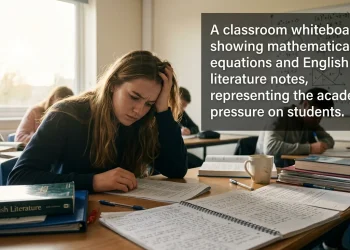

England’s schools have broken into the international top 10 for all three core academic subjects, according to the latest global education rankings released on 8 September 2026.
The 2025 Programme for International Student Assessment (PISA) results, published by the Organisation for Economic Co-operation and Development (OECD), show that 15-year-olds in England are now ranked 8th globally for science, 9th for reading, and 10th for mathematics.
While England’s scores remained stable or improved, the figures highlight a significant divergence across the home nations. Pupils in England outperformed their peers in Scotland, Wales, and Northern Ireland across every category, as educational performance in other parts of the UK fell further behind the global average.
Schools across West Sussex, including those in Chichester, follow the English education system which has seen its international standing rise even as global averages declined sharply.
National Performance and Regional Gaps
England’s science score saw a notable increase, rising to 516 in the 2025 tests from 503 in 2022. In contrast, Wales recorded the lowest scores in the UK, finishing with 456 in mathematics and 459 in reading.
According to the PISA 2025 national report for England, the country is now ranked 10th globally for mathematics. While many other developed nations saw their results plummet, England’s relative standing in the subject improved.
The results also highlight England’s performance in science. The Department for Education (DfE) is expected to monitor the findings as part of future curriculum reviews.

The ‘Digital Distraction’ Warning
The OECD used the release of the 2025 data to issue a warning regarding a global decline in reading proficiency. The organisation noted that while England’s reading performance remains strong by international standards, “digital distractions” and the rise of social media are eroding teenage reading skills worldwide.
The OECD 2025 report highlights that pupils who spend excessive time on social media or digital devices during school hours tend to score lower in reading comprehension.
While England has moved up the rankings, the divergence between the UK nations has prompted questions regarding different educational approaches. England’s focus on more traditionalist curriculum structures in recent years contrasts with the “Curriculum for Wales” and Scotland’s “Curriculum for Excellence,” both of which saw lower scores in the latest assessment cycle.
For parents and educators in the Chichester area, these results provide a benchmark for the English system’s resilience following the disruptions of previous years, though the OECD maintains that addressing the impact of smartphone usage remains a priority for maintaining these academic gains.