Chichester News
Sunday, September 13, 2026
  • News
  • Chichester
  • West Sussex
  • Money
  • Property
  • Travel
  • Business
  • Politics
  • Sport
    • Cricket
    • Football
    • Rugby
    • Running
    • Tennis
  • More
    • Culture
    • Features
    • Council
    • Charity
    • Community
    • Crime
    • Education
    • Health & Public Services
    • Lifestyle
    • Transport
No Result
View All Result
  • News
  • Chichester
  • West Sussex
  • Money
  • Property
  • Travel
  • Business
  • Politics
  • Sport
    • Cricket
    • Football
    • Rugby
    • Running
    • Tennis
  • More
    • Culture
    • Features
    • Council
    • Charity
    • Community
    • Crime
    • Education
    • Health & Public Services
    • Lifestyle
    • Transport
No Result
View All Result
Chichester News
No Result
View All Result
Home News Health & Public Services

Dentists report sharp rise in teeth grinding among younger UK adults

Jamie Dyer by Jamie Dyer
September 13, 2026
in Health & Public Services
Reading Time: 2 mins read
0 0
0
Share on FacebookShare on TwitterShare on WhatsappShare on Telegram

Dentists across the UK are reporting a “concerning” rise in severe dental wear among younger patients, seeing levels of damage previously typically associated with much older age groups. The condition, known as bruxism, involves the involuntary grinding, gnashing, or clenching of teeth, and it is estimated to affect between 8% and 10% of the UK adult population.

While the habit can occur while a person is awake, it is most common during sleep, meaning many people are entirely unaware they are doing it until the physical symptoms become impossible to ignore.

RELATED POSTS

MHRA calls for new medical laws to regulate adaptive AI in NHS

University Hospitals Sussex misses cancer diagnosis targets as national wait times rise

Recognising the signs

Because bruxism often happens overnight, diagnosis frequently relies on identifying the after-effects. Common symptoms include morning jaw pain, tension-style headaches concentrated at the temples, and earache. Some patients also report tooth sensitivity or a clicking sensation in the jaw joints, known as the temporomandibular joint (TMJ).

Experts categorise the condition into two types: “awake bruxism” and “sleep bruxism”. Awake bruxism often involves clenching the teeth and is frequently tied to concentration or stress, while sleep bruxism is a sleep-related movement disorder. Over time, the constant pressure can lead to flattened or chipped teeth and the wearing down of protective enamel.
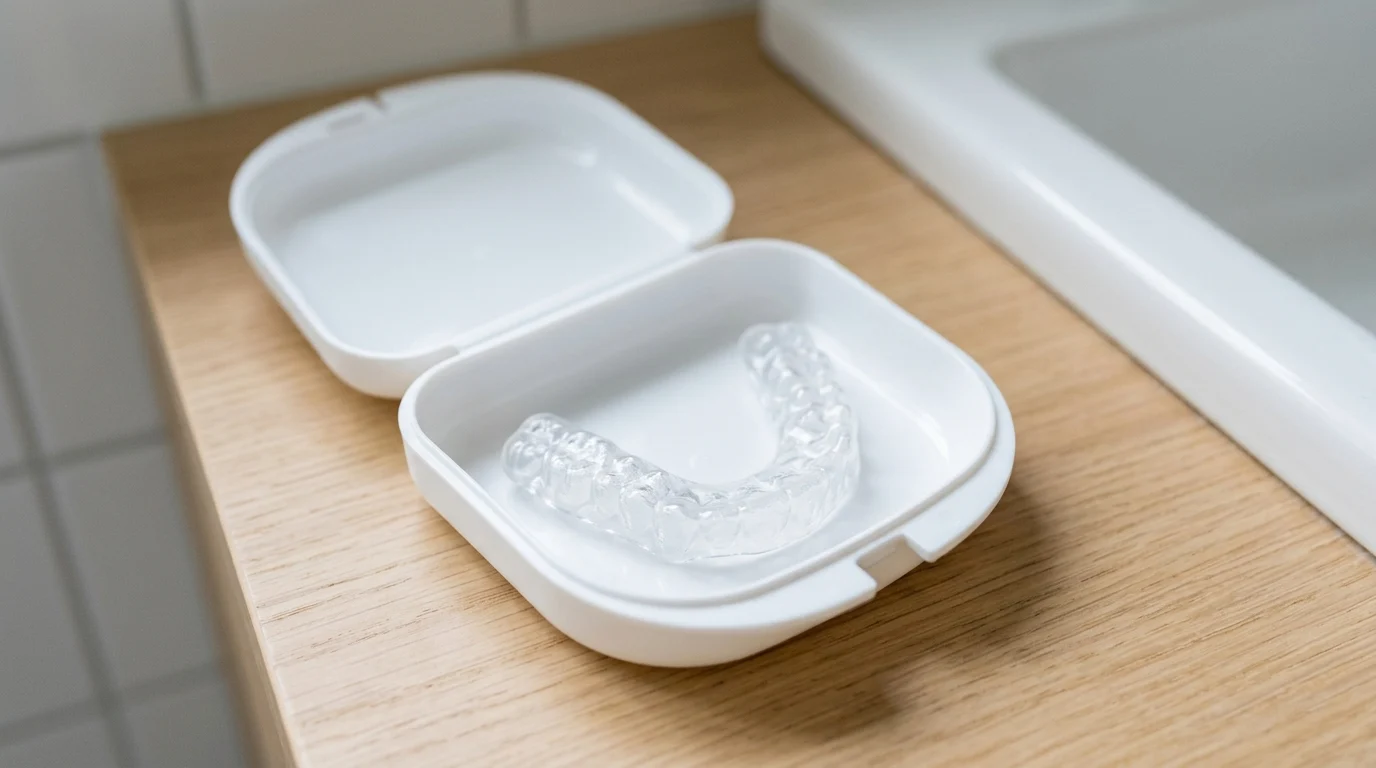
A clear dental mouthguard used to treat .
Custom-made mouthguards are often used to protect teeth from further damage.

Why is it happening?

The NHS attributes approximately 70% of teeth grinding cases to stress or anxiety. Dentists suggest that the pressures facing young adults today may be contributing to the “surge” in cases seen in surgeries nationwide.

Lifestyle factors and certain medications are also significant triggers. A medical link has been confirmed between increased grinding and the use of specific medications, including selective serotonin reuptake inhibitors (SSRIs) used for depression and stimulants used to treat ADHD. Additionally, the consumption of caffeine, alcohol, and tobacco—particularly in the hours before sleep—can exacerbate the problem.

NHS treatment and costs

If you suspect you are grinding your teeth, the first step is an examination to assess the extent of any dental wear. For many, a custom-made mouthguard or “splint” is the most effective solution. These guards are worn at night to create a physical barrier between the upper and lower teeth, protecting them from further damage and reducing jaw muscle strain.

In England, if a dentist determines there is a clinical need for a custom night guard, the treatment falls under Band 2 of the NHS dental charges. As of 2026, the cost for Band 2 treatment is £77.30. It is important to note that a dentist will usually require evidence of clinical damage or a clear medical necessity before providing a guard under the NHS, as they are not typically provided for purely preventative reasons where no symptoms exist.

For those with mild symptoms, self-care can be effective. NHS trusts often recommend jaw relaxation exercises and “sleep hygiene” improvements, such as reducing screen time and avoiding stimulants before bed. In severe cases that do not respond to mouthguards, some patients may be referred for muscle-relaxing injections (such as Botox) to the jaw muscles, though this is less common and often requires a specialist referral.


ShareTweetSendShare
Jamie Dyer

Jamie Dyer

University Of Chichester Alumnus Jamie Dyer is an experienced radio host of over 10 years, best known for founding the SouthWaves Radio brand. He is also an avid writer, musician and performer.

Related Posts

A conceptual illustration of digital healthcare and artificial intelligence.

MHRA calls for new medical laws to regulate adaptive AI in NHS

by Jamie Dyer
September 10, 2026

The UK’s medical watchdog has warned that laws must be rewritten to protect patients as adaptive AI becomes a part...

A clock on a hospital wall next to a medical chart.

University Hospitals Sussex misses cancer diagnosis targets as national wait times rise

by Jamie Dyer
September 10, 2026

New NHS England data shows University Hospitals Sussex is falling short of the 80% cancer diagnosis target, mirroring a national...

A steaming hot drink in a plain ceramic mug

Oxford University study links very hot drinks to tripled food pipe cancer risk

by Jamie Dyer
September 9, 2026

A study of nearly one million UK adults by the University of Oxford has found that drinking very hot beverages...

A conceptual illustration of a social safety net

Only 7% of public back cuts to disability benefits despite rising welfare costs

by Jamie Dyer
September 8, 2026

The latest British Social Attitudes survey shows nearly half of the public support increased spending on disability benefits, even if...

A conceptual medical illustration of red blood cells in a soft red and blue abstract style.

BBC presenter Maryam Moshiri diagnosed with incurable blood cancer Polycythaemia vera

by Jamie Dyer
September 7, 2026

BBC News presenter Maryam Moshiri has revealed her diagnosis of Polycythaemia vera, a rare and incurable blood cancer, following a...

RECOMMENDED

No Content Available

MOST VIEWED

  • Chichester Field Gunners

    Come on you Gunners! Chichester crew full of pride after gruelling field gun event

    0 shares
    Share 0 Tweet 0
  • Chichester council outlines Pinewood House temporary accommodation plan

    0 shares
    Share 0 Tweet 0
  • Poetry in motion…Chichester schoolgirl Abi Turner thrilled to read her work at London event

    0 shares
    Share 0 Tweet 0
  • West Sussex residents urged to respond on council reorganisation plans

    0 shares
    Share 0 Tweet 0
  • Chichester residents asked for views on dog control rules

    0 shares
    Share 0 Tweet 0
Chichester News

© Chichester News. All Rights Reserved.

Important Links

  • Privacy Policy
  • About
  • Contact
  • Advertise
  • DMCA
  • Terms and Conditions
  • Cookie Policy
  • Corrections Policy
  • Ethics Policy
  • Fact-checking Policy

Follow Us

Welcome Back!

Login to your account below

Forgotten Password?

Retrieve your password

Please enter your username or email address to reset your password.

Log In
No Result
View All Result
  • About
  • Advertise
  • Contact
  • Cookie Policy
  • Corrections Policy
  • DMCA Compliance
  • Editorial Policy
  • Ethics Policy
  • Fact-checking Policy
  • Home 1
  • Jobs
  • Ownership & Funding Information
  • Privacy Policy
  • Register Your Business
  • Terms and Conditions
  • What’s On
  • What’s On

© Chichester News. All Rights Reserved.

This website uses cookies. By continuing to use this website you are giving consent to cookies being used. Visit our Privacy and Cookie Policy.