


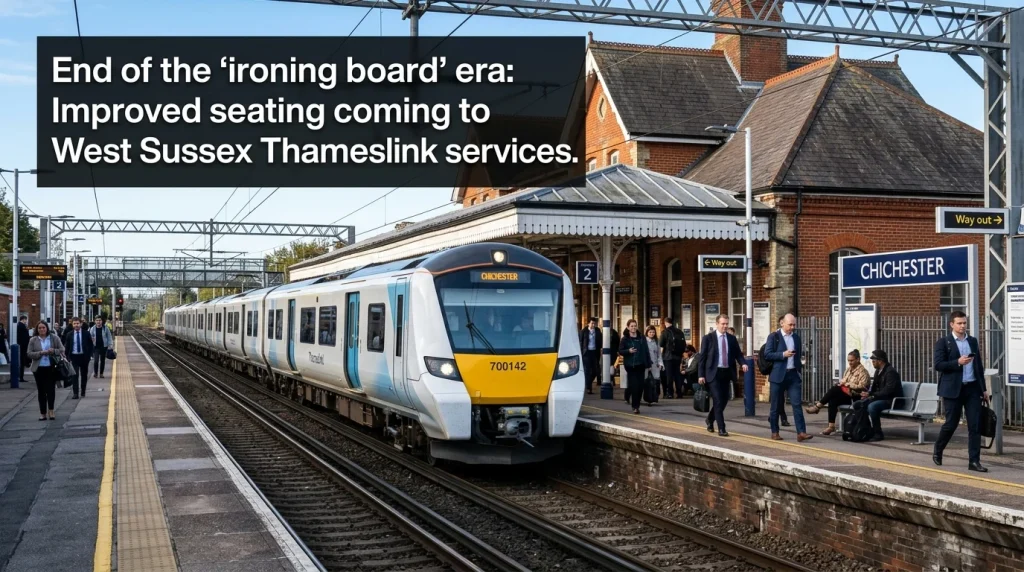
- Fleet Upgrade Planned: Govia Thameslink Railway (GTR) plans to replace or upgrade the firm ‘ironing board’ seats across its Class 700 fleet.
- Local Services Impacted: The changes will affect commuters using services from Chichester, Bognor Regis, and Littlehampton towards London Bridge and Bedford.
Commuters to Benefit as Infamous ‘Ironing Board’ Seats Face Replacement
West Sussex rail passengers may soon find their morning commute significantly more comfortable, as Govia Thameslink Railway (GTR) has confirmed plans to replace or upgrade the notoriously firm seating on its Class 700 fleet. Known colloquially among regular travellers as ‘ironing board’ seats due to their thin padding and upright profile, the current fixtures have been a long-standing source of frustration since the fleet’s introduction.
The Class 700 trains are a mainstay of the region’s transport network, serving major hubs including Chichester, Bognor Regis, and Littlehampton on the busy routes to London Bridge and Bedford. While the trains were praised for their modern layout and increased capacity, seating comfort has remained a primary complaint for long-distance commuters who spend significant time on the units during peak hours.
Balancing Safety and Comfort in Rail Design
According to Govia Thameslink Railway, the original ‘ironing board’ seats were not chosen by chance. They were specifically selected for the Class 700 fleet to meet stringent modern crash safety standards. Furthermore, the design was intended to maximise passenger capacity during high-frequency commuter journeys, ensuring more passengers could board trains during the busiest times of day.
However, the shift in rail priorities towards a ‘passenger-first’ model has prompted a re-evaluation of these interior specifications. The proposed upgrade initiative aligns with the Department for Transport’s rail reform and the broader renationalisation strategy currently being navigated by the government. This strategy is being driven forward under the Passenger Railway Services (Public Ownership) Bill, which seeks to bring services back into public hands while improving the overall quality of the passenger experience.
Funding and the Transition to Great British Railways
While the intent to refresh the train interiors has been established, the timeline for the replacement of the ‘ironing board’ seats remains contingent on external factors. Funding for the interior refresh is currently subject to government approval as part of the new mandate for the Great British Railways transition. This transition marks a significant shift in how the UK’s rail infrastructure is managed, moving away from the previous franchise model towards a more integrated national system.
The interior refresh is expected to focus on enhancing the ergonomic support of the seating without compromising the safety regulations that dictated the original design. For residents in Chichester and the surrounding coastal towns, the move represents a long-awaited response to feedback regarding the suitability of the Class 700 units for longer journeys into the capital.
Rail officials have indicated that the proposed modifications are part of a wider commitment to improving rolling stock as the industry prepares for structural changes. Until the funding is fully authorised and the design specifications are finalised, the current seating will remain in place, but the commitment to change marks a turning point for the comfort of West Sussex rail travel.