


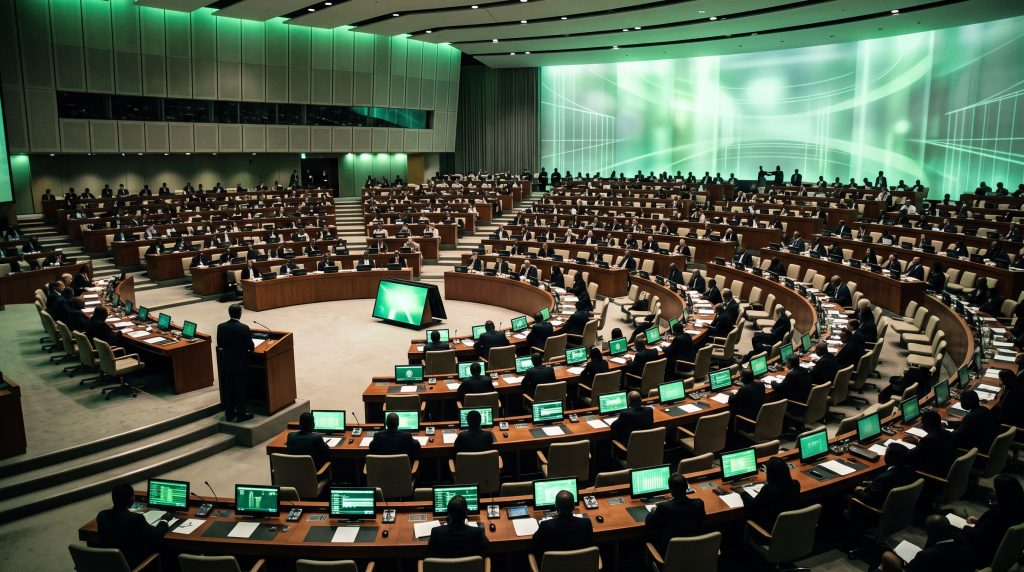
The United Kingdom has called for a fundamental shift in how the international community handles global displacement, moving away from short-term humanitarian aid towards long-term solutions that foster self-reliance.
Speaking at the United Nations Security Council in New York on 25 September 2026, Ambassador Kate Foster OBE, the UK’s Deputy Permanent Representative to the UN, highlighted that more than 100 million people are currently forcibly displaced worldwide.
Data presented during the session revealed that two-thirds of refugees are now in “prolonged displacement,” having been away from their homes for five years or more without a clear path to a permanent solution.
A three-pillar approach
The UK government outlined a three-pronged strategy to address the growing crisis, focusing on protection, development-led solutions, and the disruption of illegal trafficking routes.
Ambassador Foster emphasised the need for asylum systems that can “distinguish fairly between refugees and migrants.” The statement suggested that clear distinctions are necessary to maintain public trust in international protection frameworks while ensuring those in genuine need receive support.
The UK’s strategy also seeks to move away from the “humanitarian cycle”—where displaced populations rely on temporary aid year after year—and towards development-led solutions. This involves directing development finance toward countries hosting large numbers of refugees, allowing displaced people to work, access education, and contribute to local economies.
The third pillar of the UK’s approach involves tackling the organised criminal networks that profit from dangerous and illegal journeys across borders.


The ’50 by 35′ vision
During the session, the UK confirmed its support for the UNHCR’s ’50 by 35′ vision. This international framework aims to secure durable solutions for millions of displaced people by 2035, focusing on voluntary returns, local integration, or resettlement in third countries.
The statement at the UN Security Council followed the announcement on 24 September of a major UK support package for humanitarian relief and early recovery in Gaza. While the Gaza package addresses immediate needs, the UK delegation stressed that such interventions must be coupled with political efforts to resolve the underlying causes of conflict and displacement.
Global displacement figures
The scale of the challenge remains significant. UN figures suggest that the total number of people forced to flee their homes due to persecution, conflict, and human rights violations has reached record highs.
By focusing on self-reliance and long-term integration, the UK government is advocating for a system where refugees are no longer seen as a temporary burden but as individuals who can be empowered to rebuild their lives.
The session in New York took place during the high-level week of the UN General Assembly, a period where global leaders coordinate responses to international security and humanitarian crises. The UK’s position remains that while immediate aid is vital, the global community must prioritise the “dignity of self-reliance” to prevent another generation from being lost to permanent displacement.