


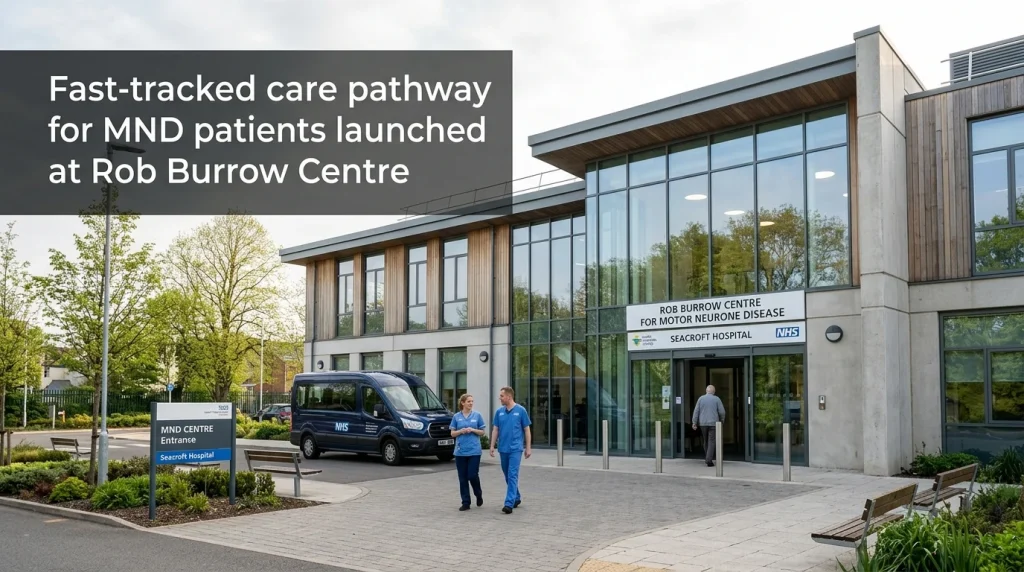
- New Support Pathway: The Health and Social Care Secretary has announced a fast-track integrated care system to reduce delays for MND patients.
- Specialist Facility: The initiative was launched at the Rob Burrow Centre for MND in Leeds, the UK’s first purpose-built centre for the condition funded by a £6.8 million charity campaign.
Integrated Support Pathway Announced for MND Patients
In a major step forward for neurodegenerative care, the Health and Social Care Secretary has announced a new fast-track care and support pathway for motor neurone disease (MND) patients. The initiative is designed to transform how services are delivered to those living with the condition, focusing on speed and the removal of the bureaucratic hurdles that often hinder access to vital equipment and specialist assistance.
The announcement took place during a ministerial visit to the Rob Burrow Centre for Motor Neurone Disease at Seacroft Hospital in Leeds. This facility represents a landmark in British healthcare as the UK’s first purpose-built centre dedicated specifically to MND care, research, and holistic support. By providing a specialist hub for experts, the centre aims to improve the quality of life for patients and their families through a multidisciplinary approach.
Funding and Community Support
The development of the Leeds centre was made possible through a sustained £6.8 million fundraising campaign managed by Leeds Hospitals Charity. The project saw immense public engagement, notably supported by Kevin Sinfield CBE and the wider Leeds community. This local effort has provided a model for how specialist facilities can be established to meet the complex needs of patients who require high levels of coordination between different medical and social disciplines.
The Department of Health and Social Care stated that the new pathway aims to tackle delays and fragmentation by integrating health, social care, and housing services for MND patients. For many, the current system is often experienced as a series of disconnected obstacles, particularly when navigating the transition between hospital care and home adaptations.
Reforming Social Care and Service Delivery
This initiative is part of a broader government plan to reform the social care system and work toward a national care service. By streamlining how local authorities and the NHS interact, the government intends to ensure that patients with motor neurone disease do not face unnecessary waiting periods for essential home modifications or palliative care resources. This mirrors other regional efforts to improve patient experiences, such as the project to help GPs support patients with non-medical issues, which focuses on a more rounded approach to wellbeing.
Advocacy groups, including the MND Association, have frequently highlighted that for a rapidly progressing condition like MND, every day counts. The integration of housing services into the health and social care pathway is expected to be a particularly impactful change, allowing for faster installation of ramps, stairlifts, and wet rooms, which are often required shortly after diagnosis. As the government moves forward with these reforms, the focus remains on ensuring that the infrastructure of the NHS can support the complex, evolving needs of patients across the country.