


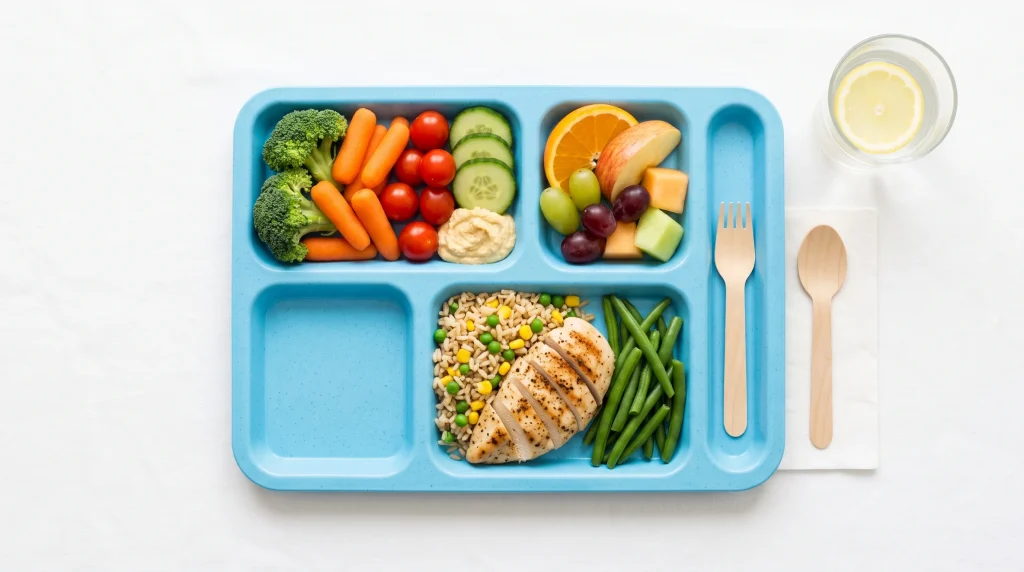
Education Secretary Lucy Powell has confirmed a “once-in-a-generation” overhaul of school food standards across England, which will see deep-fried items completely removed from menus and strict new limits placed on sugar.
The changes follow a two-year review aimed at tackling childhood obesity and rising rates of hospital admissions for tooth decay. Under the new rules, items such as deep-fried chips and nuggets will be prohibited in school kitchens, while all desserts must contain at least 50% fruit to help reduce sugar intake.
Primary schools are required to comply with the updated standards by September 2027.
What the new standards mean for school kitchens
The ban on deep-fried food represents a significant shift for caterers and local authorities. While many schools have already moved towards oven-baking, the new regulations formalise the removal of deep-fat fryers from the school estate.
Beyond the ban on fried goods, the requirement for fruit-based desserts is designed to replace processed cakes and puddings with healthier alternatives. Government officials stated that the intervention is necessary to ensure school meals provide the best possible nutritional foundation for learning.


Immediate changes for West Sussex families
While the new cooking standards will phase in over the next two years, West Sussex families are already seeing a major expansion in meal eligibility this month. Since the start of the September 2026 term, West Sussex County Council has extended free school meals to all children in households receiving Universal Credit, regardless of their total earnings.
The council manages school meal contracts for many local primary schools. For parents in Chichester and the wider county, this change means that many who previously fell just outside the income threshold are now eligible for support.
To access this benefit, families must submit an application through the local authority. You can check your eligibility and apply directly through the West Sussex County Council website.
Health and the 10-Year Plan
The Department for Education (DfE) has framed these changes as a cornerstone of the broader 10-Year Health Plan. Education Secretary Lucy Powell, who took office in July 2026, noted that the standards are part of a multi-agency approach to improving long-term public health outcomes.
The DfE has indicated that the phased rollout is intended to allow schools to renegotiate catering contracts and adjust kitchen equipment budgets ahead of the 2027 deadline.