


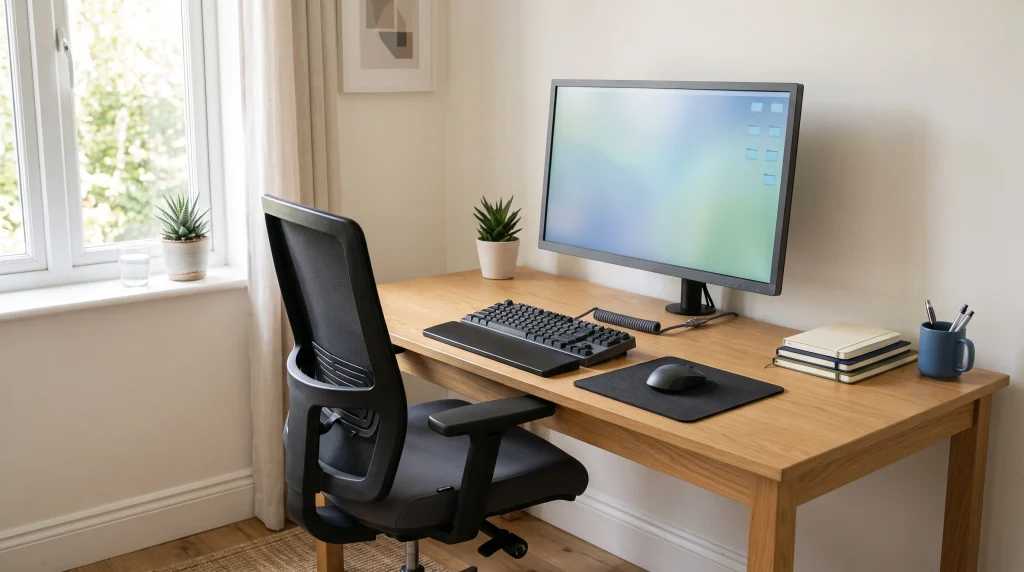
As remote and hybrid working becomes a permanent fixture for many UK employees, the requirements for a functional and legal home office have shifted significantly in 2026. New tax regulations and updated health and safety guidance mean that setting up a workspace involves more than just finding a quiet corner.
For those working from home in the Chichester area, understanding the latest HMRC rules and employer obligations is essential to avoid unexpected costs or health issues.
New HMRC Tax Rules for 2026
A major change to the financial landscape of remote working took effect on 6 April 2026. HMRC has abolished the ability for employees to claim tax relief for working-from-home expenses if they choose to work remotely or are in a hybrid role by choice.
Previously, many workers could claim a flat rate of tax relief to help cover increased utility bills. Under the current rules, you can only claim tax relief of £6 per week if your employer does not provide an office or if your specific job requirements necessitate living a significant distance from your workplace. If your employer has a designated office available to you, but you prefer to work from home, you are no longer eligible for this tax relief. You can check the latest eligibility criteria on the official GOV.UK portal.


Employer Health and Safety Obligations
Despite the change in tax status, employer responsibilities regarding health and safety remain stringent. The Health and Safety (Display Screen Equipment) Regulations 1992 apply to all home workers who use screens for an hour or more daily.
In March 2026, the Health and Safety Executive (HSE) issued a reminder that hybrid and home workers must receive the same level of protection as office-based staff. This includes:
- Risk Assessments: Employers are legally required to conduct or facilitate a DSE (Display Screen Equipment) workstation assessment for home-based staff.
- Equipment Provision: If a risk assessment identifies that specific equipment is necessary for a safe setup—such as an ergonomic chair, a separate keyboard, or a monitor riser—the employer is responsible for the cost. They cannot charge employees for equipment required under health and safety law.
- Eye Tests: Home workers are entitled to employer-funded eye tests if they regularly use display screen equipment.
Ergonomic Standards for Home Setup
Achieving a professional ergonomic setup is vital for preventing musculoskeletal disorders, which affected an estimated 511,000 UK workers in the 2024/25 period. According to current HSE guidance, the top of your computer monitor should be at or slightly below eye level and roughly an arm’s length away. This prevents neck strain and promotes a neutral spine position.
The standard desk height in the UK has also seen a gradual adjustment to 74cm to reflect the increasing average height of the population. When seated, your keyboard should be at or below elbow height, and your feet should be flat on the floor or on a footrest. Experts also advise against facing a window directly; while natural light is beneficial, the contrast between the screen and the bright outdoor light can lead to significant eye strain.
Local Workspace Options in Chichester
For residents who find it difficult to maintain a permanent or ergonomic home office, Chichester offers several professional alternatives. The Chichester Enterprise Centre (managed by Basepoint) provides flexible desk space and office units for those requiring a dedicated professional environment.
Additionally, the Marchwell Studios project reached a major “weatherproof” construction milestone in July 2026. Managed by the Chichester Community Development Trust (CCDT), this newly restored creative hub is set to provide additional workspace for local makers and remote workers. Other options for local professionals include flexible facilities at Northshore Boatyard in Chichester Harbour, which caters to both creative and corporate needs outside of a traditional home setting.