


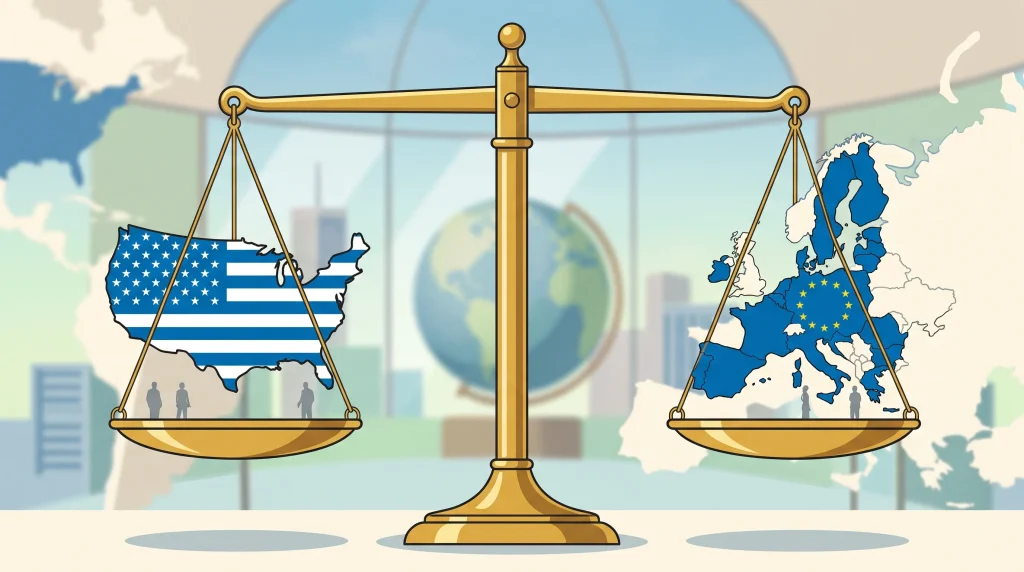
The United States Department of Justice has formally moved to intervene in a legal challenge brought by Elon Musk and X Corp against a €120 million ($138 million) fine imposed by the European Union. The Department of Justice filed its application with the EU General Court, marking a significant diplomatic and legal escalation in the battle over global tech regulation.
The European Commission originally levied the fine in December 2025, alleging that X violated the Digital Services Act (DSA). The charges centered on what regulators described as “deceptive” practices regarding blue checkmarks, which the EU claims were sold without sufficient identity verification. The total penalty was divided into three specific categories: €45 million for the blue checkmark system, €35 million for non-compliance with ad repository requirements, and €40 million for restricting researcher access to platform data.
The U.S. intervention centers on the argument that European regulators have exceeded their territorial jurisdiction. According to the DOJ, the EU’s method of calculating the fine is particularly problematic because it was based on the “single economic unit” of Elon Musk’s total global wealth. This approach factored in the turnover of unrelated American companies, including SpaceX and Tesla, rather than being limited to the revenue generated by X Corp within European borders.


Assistant Attorney General Brett A. Shumate stated that the European Commission “inappropriately attempted” to expand its regulatory reach to American companies that do not operate under EU jurisdiction. The DOJ argues that this strategy targets “engines of innovation” based in the United States and sets a dangerous precedent for international corporate liability.
Jurisdictional Conflicts and Article 40
The U.S. government is seeking to join the case under Article 40 of the Statute of the Court of Justice of the EU. This legal mechanism allows a third-party state to intervene in proceedings if it can demonstrate a specific interest in the outcome of the case. By joining Musk’s appeal, which was officially lodged in February 2026, the U.S. seeks to limit the ability of foreign regulators to “pierce the corporate structure” of U.S.-based firms.
The dispute has also moved into the diplomatic sphere. The U.S. State Department was reportedly involved in preparing the legal filing, signaling a shift in how Washington views European tech enforcement. Reports indicate that the U.S. has even imposed sanctions on five individuals in relation to the dispute, including former EU Commissioner Thierry Breton, who was a prominent figure in the implementation of the DSA.
The European Commission remains firm in its stance. While the U.S. intervention does not automatically stay the fine, it introduces a complex geopolitical layer to a case that will determine how much authority the EU can exert over the global financial structures of American technology leaders.
If the General Court accepts the U.S. application, it will allow American government lawyers to present oral and written arguments during the proceedings. The outcome is expected to have lasting consequences for how “joint and several” liability is applied to multi-company owners like Musk who operate across disparate sectors including aerospace, automotive, and social media.